MIDNIGHT STATIC PROGRAM NOTES
John Cage - Four6 (1990 - 1992)
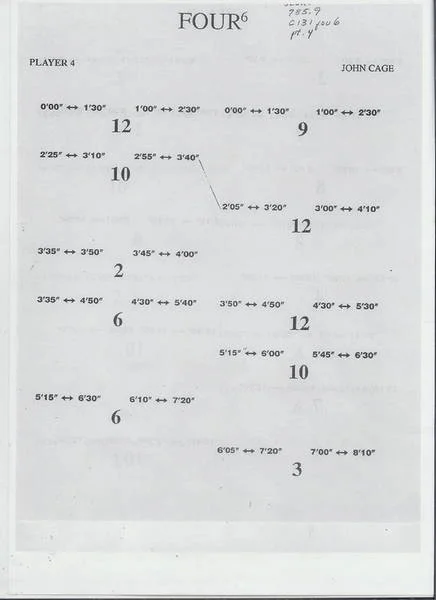
Four6 is a meditative, open-form work where structure and freedom co-exist. Cage provides us a temporal framework, with the opportunity to experiment with sonic content in both static and dynamic forms. The nature of the work means every performance is different based on the sounds that each performer choses before playing. Our arrangement features Mina Johansson’s warped saxophone notes and growls, Rosie Bennett’s experimentation with howling axillary percussion, Jarrah Zavier’s dynamic drum kit and nature samples, and Aidan Eccleshall’s buzzing sound design, spoken word and harmonic whirlies. The score is for any way of producing sounds and was created for Pauline Oliveros's sixtieth birthday, as well as for Joan La Barbara, William Winant, and Leonard Stein.
My Pet Rock
A giant pet rock convulses with the memories and secrets of its shared childhood with its companion. Jeremy Smith & Tashi-Louise Laurie-Flint have used scrap materials to create a giant rock puppet. Voiced by Tashi-Louise Laurie-Flint and sound design by Jeremy Smith, featuring Holly Gallagher as a woman facing her own mortality.
Georges Aperghis - Récitations (1977–78)
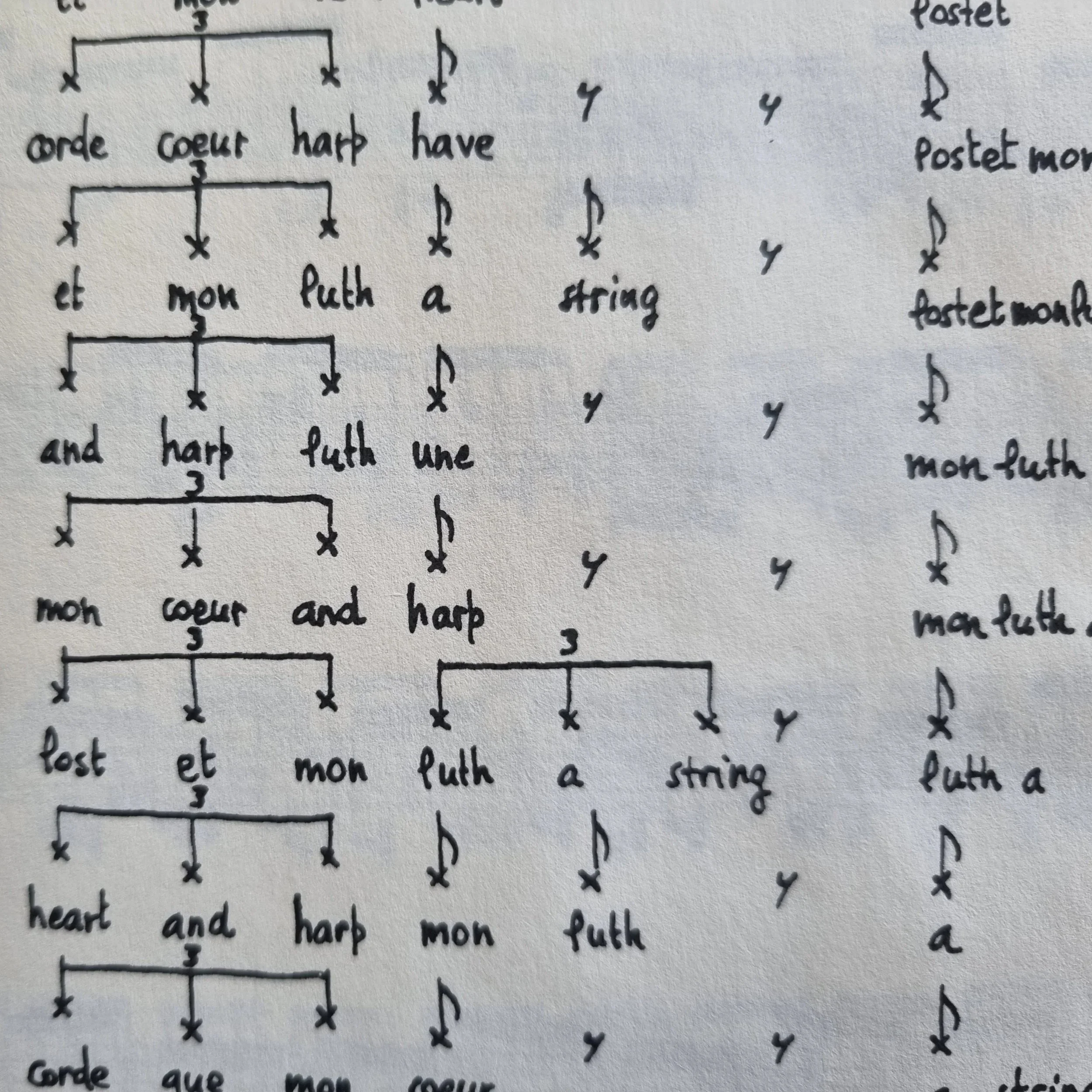
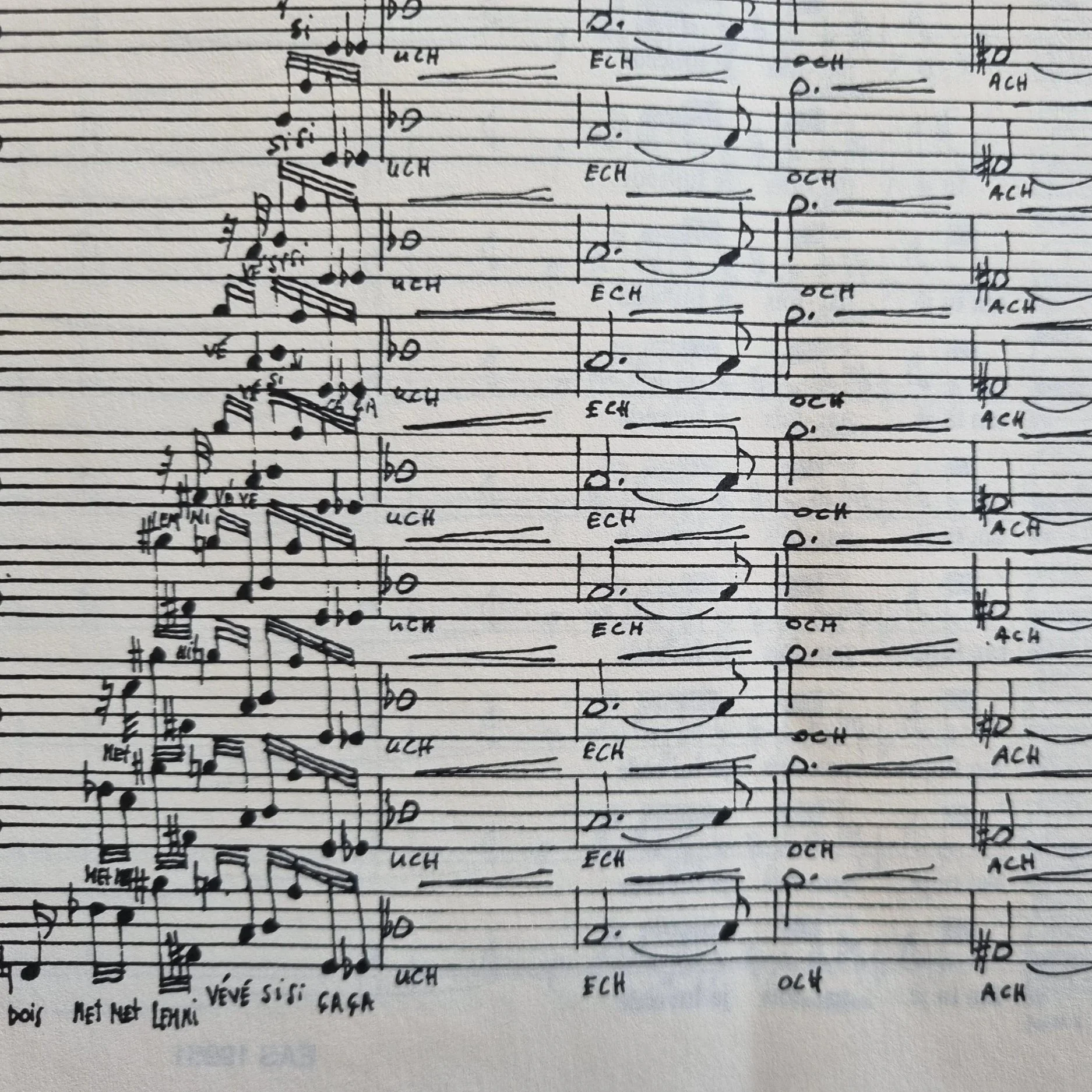
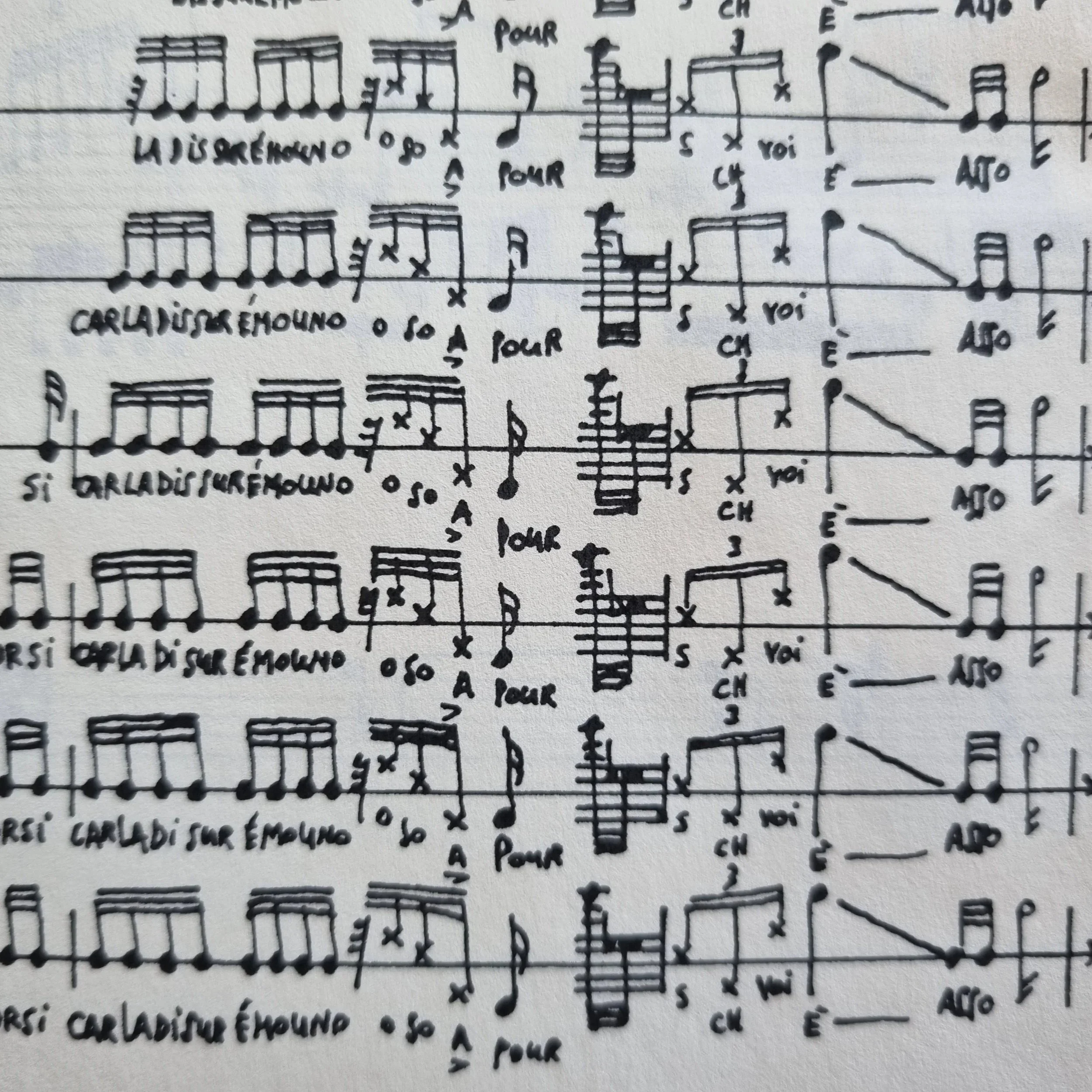
Récitations is a landmark cycle of fourteen pieces for solo voice, celebrated as one of the most demanding and inventive works in contemporary vocal music. Written originally for comedian-singer Martine Viard, the cycle blends virtuosic vocal writing with theatrical gesture, blurring the lines between speech, song and performance art.
At the core of Récitations lies the portrait of a person struggling to speak, revealing communication not as clarity, but as the messy, compelling struggle to be understood. The emotional stakes are almost always unbearably high, yet the plot is unknown, and the text is fractured into syllables, homophones, and playful linguistic detours. Aperghis submits this imaginary language - and the performer - to almost impossible tests of rapid repetition, accumulation, vocal gymnastics and great rhythmic pressure. Meaning seems always on the verge of emerging, yet remains elusive. The result is an ambivalent, sometimes humorous, sometimes distressing world where communication is both a theatrical game and intensely physical challenge.
Mitch Riley will perform five of the fourteen Récitations

Mitch Riley and Ronan Apcar - Improvisation on Five Bells
For this short improvisation by Ronan Apcar and Mitch Riley, the bell-like tolling in George Crumb's Eine Kleine Mitternachtmusik will be the central gesture in a meditative exploration of Australian poet Kenneth Slessor's elegiac Five Bells, a work in which time and memory float on the moonlit water of Sydney Harbour. You can read the poem and further information via this link
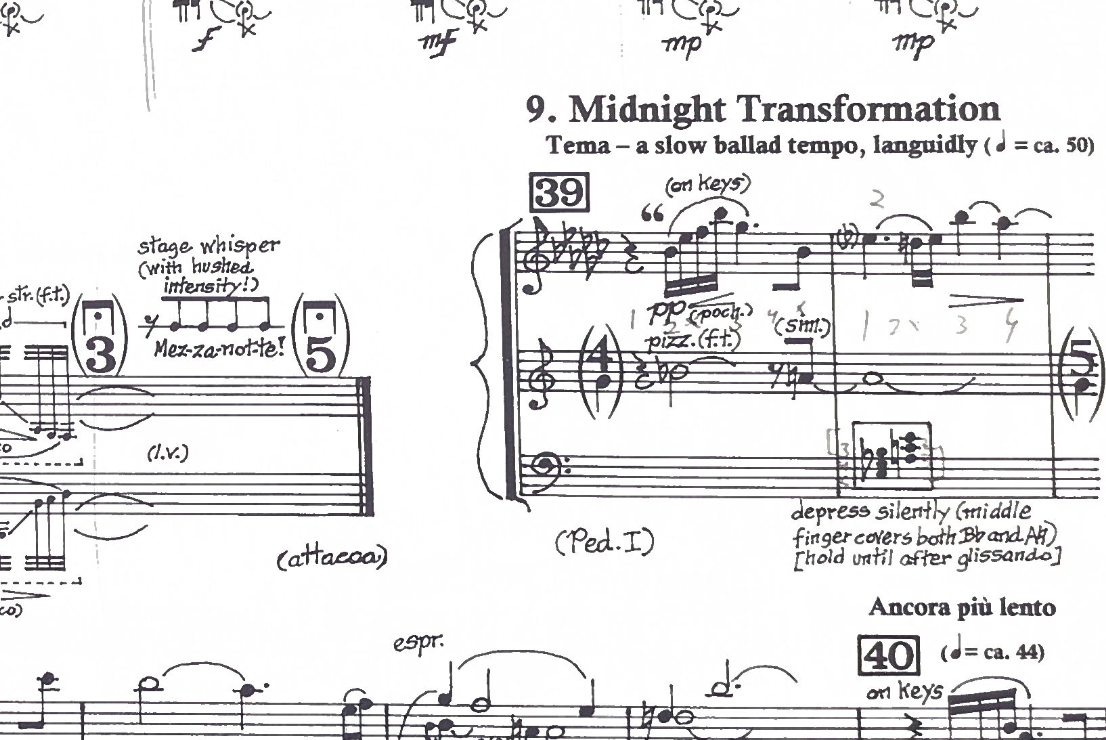
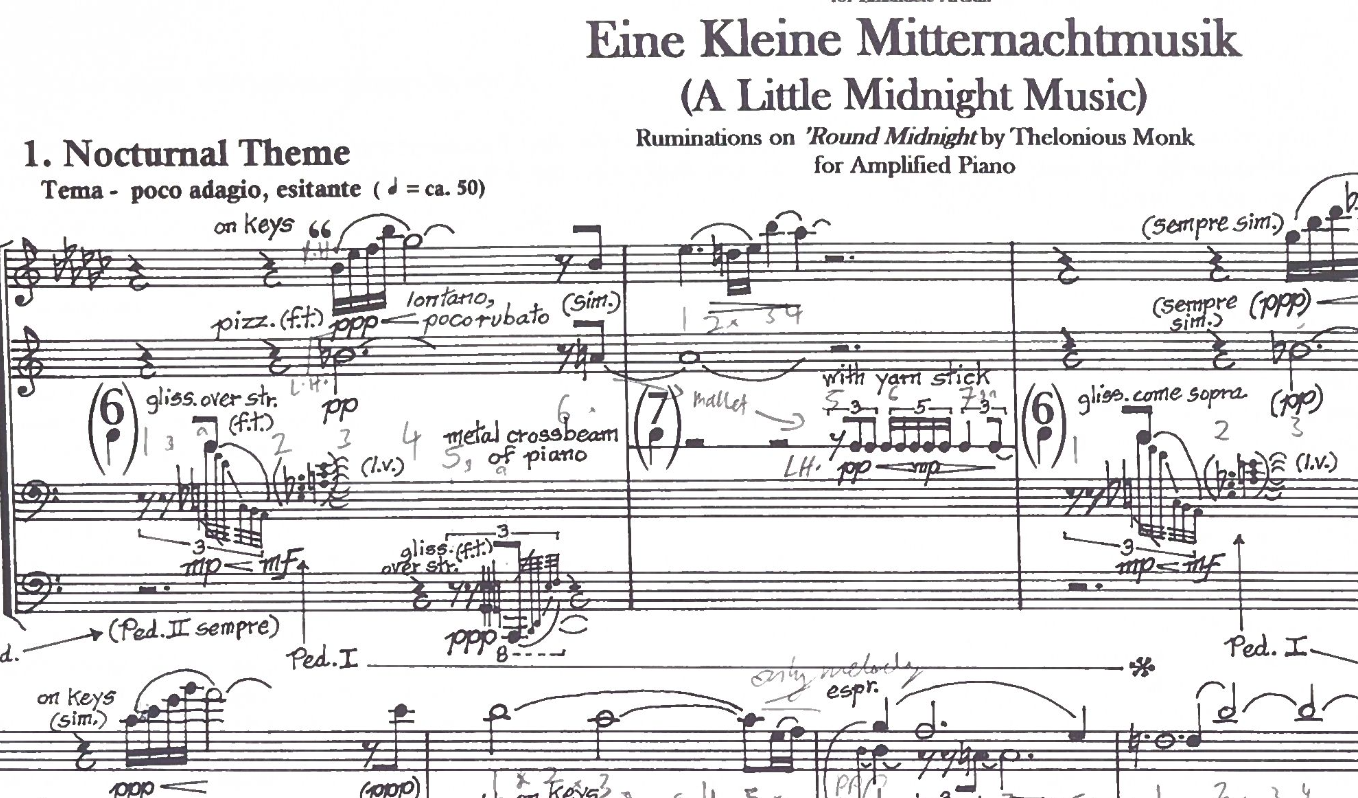
George Crumb - Eine Kleine Mitternachtmusik ("A Little Midnight Music") 2001
"I have long been an admirer of Thelonious Monk's famous Jazz melody 'Round Midnight. In the beginning and concluding movements of my suite I quote entire phrases of Monk's theme (while retaining his dark e-flat minor tonality and his exquisite and almost Debussyesque harmonic colourations) and the listener will also recognise isolated melodic fragments of the tune at various other points in my score. As a compliment to Monk's world I have evoked two immediately recognisable genres of American popular music - "ragtime" and "blues." I even include Debussy's mordantly saccharine reference to Wagner's Tristan (which gave me the eerie sense of "quoting a quotation"), and for good measure throw in a motif from Till Eulenspiegel! Towards the end of my Mitternachtmusik suite the pianist is required to ring in the midnight hour by chanting the Italian numerals one through twelve, accompanied by the ringing, bell-like sonorities of the piano. Then a mysteriously and portentously uttered mezzanotte ("midnight") prefaces the final reference to Monk's melody. The style of piano writing in Eine Kleine Mitternachtmusik utilises (as in all of my earlier piano works) the resources of the "extended piano." The use of pizzicato effects, glissandos, muted tones, production of harmonics, and even in several passages, striking the metal structural beams of the piano with a percussionist's beater, greatly enlarges the colouristic possibilities of the instrument. “ - George Crumb